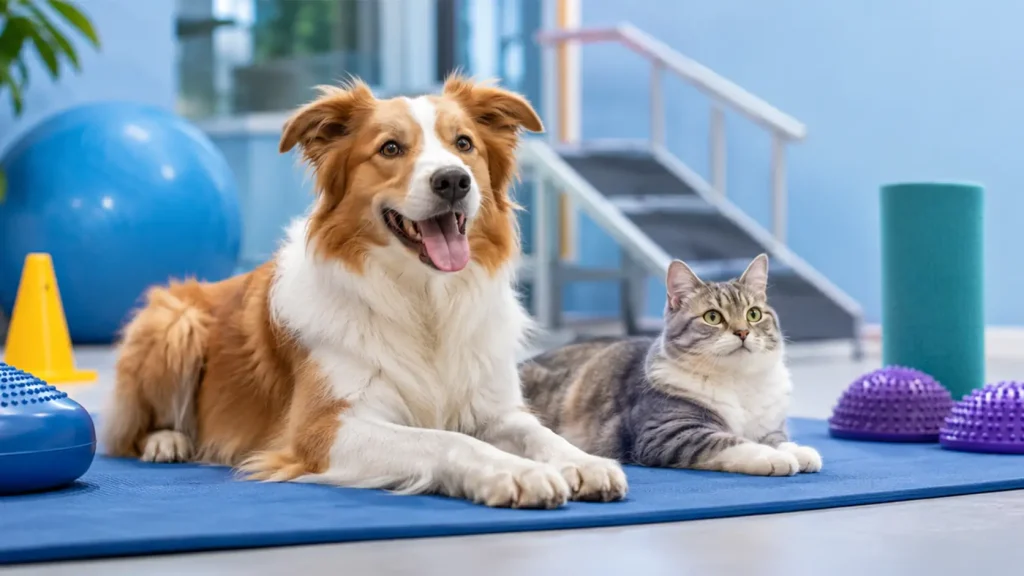
Your dog used to jump into the car without a second thought. Now they wait for a little help. Your cat used to spend hours on their favourite windowsill. Lately, they prefer staying on the floor.
Is it just age? Or could something make movement uncomfortable?
Changes in how your pet moves can happen for many reasons. Sometimes, physiotherapy can help.
What Is Pet Physiotherapy?
Think of it as helping your pet move more comfortably.
Veterinary physiotherapy uses rehabilitation exercises and other techniques to support movement, strength and recovery. It may be recommended for pets recovering from surgery, dealing with an injury or having difficulty with everyday activities.
And no, physiotherapy isn’t only for dogs. Cats and other animals may benefit too, depending on their condition.
How Do I Know If My Pet Needs Physiotherapy?
Start by watching how they move. Does your dog take longer to stand up after resting? Is your cat avoiding places they used to jump onto?
Have you noticed any of these changes?
- ✓Stiffness when walking or getting up
- ✓Difficulty climbing stairs or jumping
- ✓Limping or changes in the way they walk
- ✓Weakness or poor balance
- ✓Less interest in walks or playtime
- ✓Difficulty moving after surgery or an injury
These signs don’t automatically mean your pet needs physiotherapy. But they do tell you something may have changed. A veterinary assessment can help identify the reason.
Can Physiotherapy Help After Surgery?
Yes. In some cases, it can be an important part of recovery.
After orthopedic or neurological surgery, your pet may need time and support to regain strength and movement. Depending on their condition, physiotherapy may help improve joint mobility, rebuild muscle strength and support balance.
But recovery isn’t the same for every pet. One dog may gradually return to short walks. Another may need more time before putting weight comfortably on an affected leg.
The rehabilitation plan depends on the surgery, your pet’s condition and how well they are recovering.
What Happens During a Pet Physiotherapy Session?
First, the veterinary team needs to understand what is affecting your pet’s movement. This may involve checking their medical history, observing how they walk and assessing their mobility.
From there, a rehabilitation program can be planned around their needs. Some pets may need gentle exercises to improve movement. Others may need help rebuilding strength or improving coordination.
Sessions are adjusted according to what your pet can comfortably manage.
The goal is not to push them to do more than they are ready for. It is to help them make progress safely.
Why Do Orthopedics and Neurology Matter in Physiotherapy?
Because not every movement problem starts in the same place. A pet may struggle to walk because of a joint injury, muscle weakness or a condition affecting the nervous system. Understanding the cause matters before deciding how to help.
At Dr. Vet Animal Hospital in Abu Dhabi, our orthopedic, neurology and physiotherapy teams work together to support pets who need rehabilitation. This allows the team to coordinate assessments, treatment and recovery plans according to each pet’s condition.
Can I Help My Pet Recover at Home?
Yes. And sometimes, small changes at home can help. You may be advised to:
- ✓Place non-slip mats on slippery floors.
- ✓Make your pet’s bed easier to reach.
- ✓Adjust walks and playtime during recovery.
- ✓Follow exercises recommended by your veterinary team.
- ✓Keep track of changes in how your pet moves.
But don’t start rehabilitation exercises on your own. An exercise that helps one pet may not be suitable for another, especially after surgery. Ask your veterinary team what is safe for your pet.
Quick fact: Physiotherapy isn’t always about getting a pet back to running or jumping. Sometimes, helping them stand up, walk comfortably or reach their favourite resting place is an important step forward.
When Should I Speak to a Vet?
If your pet is moving differently, struggling with activities they used to enjoy or showing signs of discomfort, don’t simply assume it’s part of getting older.
A veterinary assessment can help determine what’s causing the change and whether physiotherapy may be useful. At Dr. Vet Animal Hospital in Abu Dhabi, our team can assess your pet’s mobility and discuss suitable treatment and rehabilitation options.
Because sometimes, the first sign that your pet needs help isn’t a limp or an obvious injury. Sometimes, it’s the jump they no longer make. Contact Dr. Vet Animal Hospital to book a mobility assessment.
Frequently Asked Questions
How do I know if my dog needs physiotherapy?
If your dog is struggling to stand, limping, walking differently or having difficulty with everyday activities, a veterinary assessment can help determine whether physiotherapy may be beneficial.
Can cats have physiotherapy?
Yes. Cats may benefit from physiotherapy for certain injuries, mobility problems or recovery after surgery. Treatment depends on their individual condition.
Does physiotherapy help pets after surgery?
Physiotherapy may help support strength, joint mobility and coordination during recovery from certain orthopedic or neurological procedures.
How many physiotherapy sessions will my pet need?
There is no fixed number. It depends on your pet’s condition, treatment plan and progress during rehabilitation.
Can I do physiotherapy exercises with my pet at home?
Your veterinary team may recommend exercises you can safely carry out at home. Always follow their instructions rather than introducing exercises yourself.